

Table of Contents
- What Witchcraft Is and What It Isn't
- Getting Started with Witchcraft: Your First Steps
- Witchcraft Supplies for Beginners: What You Actually Need
- Beginner Witch Spells: Starting with Intention
- Simple Witchcraft Rituals for Daily Practice
- How to Make a Spell Candle and Set Your Intention
- Choosing Your Path: Tradition, Ancestry, and Personal Practice
- Safety, Consent, and Ethical Witchcraft
- Frequently Asked Questions
Last Updated: October 9, 2026
What Witchcraft Is and What It Isn't
Witchcraft is a spiritual practice rooted in intention, personal power, and connection to natural forces. It's not a religion requiring conversion, nor is it inherently dark or dangerous. Many people confuse witchcraft with Wicca (a specific religious tradition), satanism (which witchcraft is not), or stage magic (which is entertainment, not spiritual practice).
At its core, witchcraft involves directing your own energy and will toward creating change in your life and the world around you. It's about recognizing your agency and learning to work with natural cycles, intention-setting, and ritual to manifest what matters to you. Some practitioners connect their witchcraft practice to specific cultural traditions or ancestral lineages.
The key distinction: witchcraft is something you do, not something you are. You're not born a witch, you become one through study, practice, and intention. This means how to start witchcraft for beginners is genuinely open to anyone willing to learn respectfully and thoughtfully.
Getting Started with Witchcraft: Your First Steps
Starting a witchcraft practice doesn't require elaborate rituals, expensive tools, or years of study before your first spell. The most important first step is grounding yourself in the fundamentals and approaching the practice with intentionality rather than rushing through multiple workings at once.
Here's how to begin:
-
Read foundational books and trusted sources. Start with beginner-friendly guides that explain core concepts like energy, intention, and basic ritual structure. Look for authors who address ethics, cultural respect, and the difference between witchcraft and appropriation.
-
Connect with your ancestry. Explore cultural practices accessible to you through your own heritage, whether that's folk magic traditions from your family's background, seasonal celebrations, or spiritual practices tied to your lineage. This personal connection often provides the most meaningful entry point into witchcraft.
-
Observe natural cycles. Pay attention to the moon phases, seasons, and daily rhythms. Many beginner witch spells align with these cycles. A new moon is traditionally associated with new beginnings; a full moon with manifestation and release.
-
Start with intention-setting. Before attempting any spell or ritual, practice simply clarifying what you want to create or change. Write it down. Speak it aloud. Sit with it. This is the foundation of all effective witchcraft.
-
Keep a practice journal. Record your early spells, rituals, and observations. Note what feels resonant, what doesn't, and what shifts you notice over time. This builds your confidence and helps you refine your personal approach.
Witchcraft Supplies for Beginners: What You Actually Need
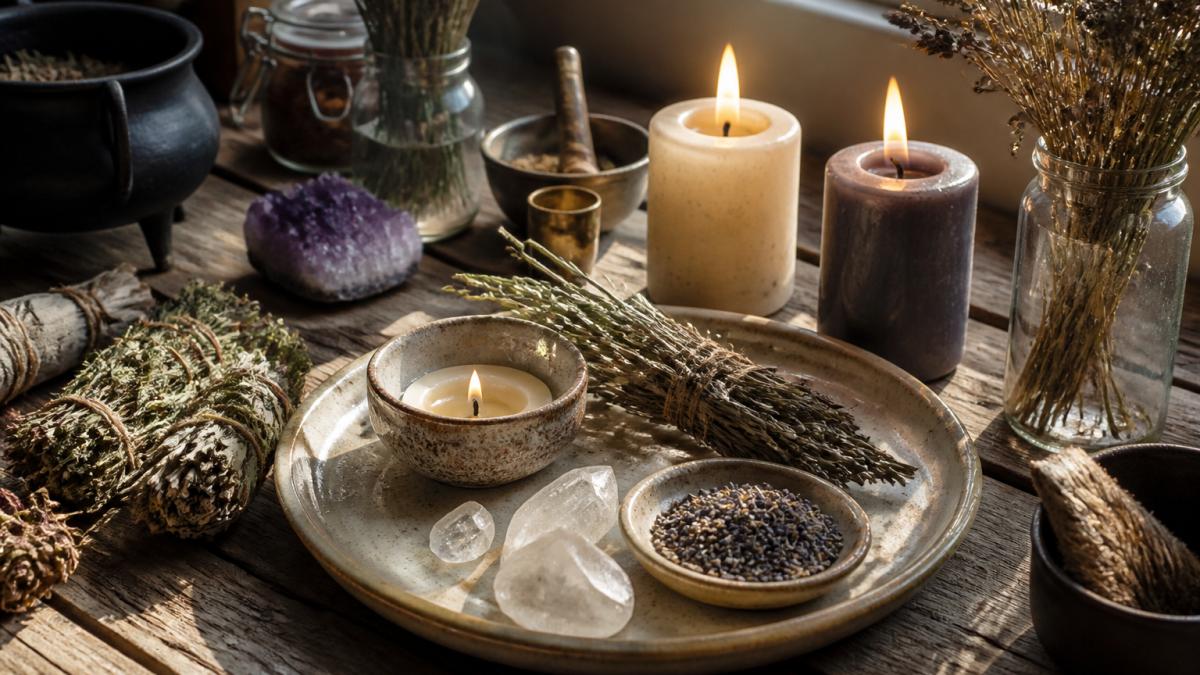
The truth about witchcraft supplies is this: you don't need much to begin. Many effective practitioners work with items already in their homes, and simple tools are often more powerful than expensive ones because they carry genuine intention rather than marketing.
Found Items and Household Basics
Your kitchen and home already contain powerful witchcraft supplies. Salt from your pantry can cleanse a space. Water from your tap (or collected rainwater) works for ritual. Herbs you cook with, rosemary, bay leaf, thyme, carry real magical properties tied to their traditional uses. Stones from your yard, coins, or personal objects hold meaning and can anchor spells.
A simple candle from any store works for candle magic. A pen and paper for writing intentions. A cup or bowl for mixing. These are enough to begin a meaningful witchcraft practice.
Simple Tools That Support Your Practice
As your practice deepens, a few intentional tools can enhance your work. A dedicated candle for spellwork, ideally one made with intention and nontoxic ingredients, becomes a focal point for your energy.
A ritual tray or small altar space gives your practice a physical home. The Blue Hexproof Spellcaster's Tray provides a contained, beautiful space for organizing your tools and creating focused ritual work.
Herbs and spell blends designed for specific purposes, like the Healing & Blessing Spell Blend, can be sprinkled on candles, added to mojo bags, or placed in altar vessels.

An incense burner like the Terra Cotta Jesmonite Moon Phases Incense Burner serves both practical and aesthetic purposes, allowing you to incorporate smoke into your rituals while creating a focused, intentional space.

The common thread: tools matter less than your intention behind them. A tool chosen thoughtfully and used consistently becomes more powerful than an expensive one used half-heartedly.
Beginner Witch Spells: Starting with Intention
The simplest beginner witch spells are built on a single, clear intention. Before you write spells or attempt any working, get comfortable with the practice of intention-setting itself.
A beginner spell follows this basic structure: clarify what you want, gather or create a focus (a candle, written word, object), direct your energy toward that focus while holding your intention, and close the working with gratitude or release.
Start small. A spell to bring calm to your morning. A working to support focus during a difficult project. A simple ritual to mark the transition from one season to another.
Many beginner witch spells don't require words or complex steps. Lighting a candle while visualizing what you want to create is a spell. Writing your intention on paper and burning it is a spell. Holding a stone and speaking what you need is a spell.
Simple Witchcraft Rituals for Daily Practice
Daily practice doesn't mean elaborate ritual. It means consistent, intentional engagement with your witchcraft journey.
A simple morning ritual might be: light a candle, take three conscious breaths, set one intention for your day, and express gratitude for something you have. This takes five minutes and anchors your energy.
Terra Cotta Jesmonite Moon Phases Incense Burner →
An evening practice might involve journaling what shifted during your day, noting synchronicities or signs, and reflecting on whether your morning intention felt present.
Many practitioners find that connecting with natural cycles through simple rituals deepens their practice. Acknowledging the new moon with a brief moment of intention-setting. Pausing at sunset to release what no longer serves you.
The key is consistency over complexity. A two-minute daily practice sustained for months will teach you far more than an elaborate ritual performed once.
How to Make a Spell Candle and Set Your Intention
A spell candle is simply a candle infused with your specific intention. You don't need to pour your own wax to create one, though you can. The real work is in the intention-setting.

To use a candle for spellwork:
- Choose a candle (hand-poured, nontoxic options like those from Black Moon Ritualcraft are ideal, but any candle works).
- Hold it in both hands and clarify your intention. What specifically do you want this candle to support?
- If you have a spell blend or herbs, sprinkle them on the candle or around its base.
- Light the candle and spend at least one minute in focused attention on your intention. Visualize it, feel it, speak it aloud if that feels right.
- Let the candle burn as long as feels safe and intentional. Some practitioners burn it fully; others light it for specific periods.
- When you're complete, thank the candle and your own power for the work.
The Season Of The Witch Soy Wax Candle from Black Moon Ritualcraft is specifically designed to support spell work and ritual atmosphere. Hand-poured with nontoxic ingredients and phthalate-free fragrance, it's crafted to align with witchy energy and seasonal magic.
The candle itself is a tool, the real spell is your focused intention and energy directed toward what you want to create.
Choosing Your Path: Tradition, Ancestry, and Personal Practice
One of the most important decisions in how to start witchcraft for beginners is determining what kind of practice resonates with you.
Some practitioners connect deeply with specific traditions, Wicca, hoodoo, kitchen witchcraft, hedge witchcraft, or ceremonial magic. Others draw from their cultural ancestry, exploring folk magic practices from their family's background.
The crucial piece: approach any tradition or cultural practice with respect and research. If you're drawn to practices from a culture that isn't your own, educate yourself about appropriate engagement and whether participation is genuinely welcome.
Your ancestry offers a powerful entry point. Explore the spiritual and magical traditions accessible through your own heritage. This personal connection often feels more grounded and authentic than adopting practices from outside your lineage.
If you're not sure what resonates, start with what's available to you: the seasons where you live, the plants in your region, the cultural practices your family knows.
Safety, Consent, and Ethical Witchcraft
Ethical witchcraft begins with consent. Any spell or working that affects another person, even with good intentions, raises important questions about their autonomy and will.
The clearest ethical guideline: work only on yourself and with your own energy. Spells for your own manifestation, protection, healing, and growth are straightforward.
This doesn't mean you can't hold good wishes for others. You can.
Practical safety considerations matter too. Never leave burning candles unattended (the CDC). Keep flame away from fabric, paper, and flammable materials.
Mental and emotional safety is equally important. Witchcraft can bring up deep feelings and unprocessed experiences.
Trauma-informed witchcraft means recognizing that your practice is yours and doesn't need to look like anyone else's.
| Safety & Ethics Consideration | Best Practice |
|---|---|
| Consent in spellwork | Work only on yourself; hold wishes for others without imposing spells |
| Candle safety | Never leave burning candles unattended; keep away from flammable materials |
| Herb safety | Research any herbs before burning or ingesting; check for toxicity |
| Cultural respect | Study traditions thoroughly; honor protocols around who can practice them |
| Personal boundaries | Stop any practice that feels unsafe; your comfort comes first |
| Grounding practice | Start with simple workings; don't attempt complex spells before foundational learning |
Starting how to start witchcraft for beginners is genuinely accessible, and it doesn't require expensive tools or years of study before your first meaningful working.
Frequently Asked Questions
Can you practice witchcraft without buying supplies?
Yes. Many beginner witches start with found items from their home: kitchen herbs, water, salt, paper, and intention. Your focus and energy matter far more than expensive tools. A simple candle or items from nature work just as well as curated supplies. Start with what you have, and add tools only when they genuinely support your practice.
What should a beginner witch learn first?
Start with foundational concepts: understanding what witchcraft actually is, learning about intention and energy, and exploring your own cultural or ancestral traditions. Then practice simple rituals like candle work or writing spells before attempting complex workings. Focus on one practice at a time rather than juggling multiple spells or rituals simultaneously.
How do I explore my ancestry respectfully when starting witchcraft?
Research your own cultural heritage to discover witchcraft or spiritual practices that belong to your lineage. Many cultures have folk magic, herbalism, or ritual traditions. Learn from sources within that culture, not appropriated versions. If your ancestry is mixed, explore each tradition separately. Respecting closed practices means not adopting traditions that aren't yours, find what is genuinely accessible to you.
What is the rule of three in witchcraft?
The rule of three is a belief that energy sent out returns to you threefold. Some witches follow this as an ethical guide to ensure their intentions are positive and won't harm others. It encourages mindful spellwork and reminds practitioners that actions have consequences. Not all witches follow this rule, but many use it as a framework for ethical practice.
How do I create a simple spell or ritual?
Start with a clear intention, gather simple tools (a candle, herbs, or water), and create a focused moment to direct your energy toward that goal. Write your intention down or speak it aloud. Light a candle, hold your focus, and visualize the outcome. Close by grounding yourself. Keep your first spells simple and practice one at a time rather than layering multiple workings.
What supplies do beginner witches actually need?
The essentials are intention, focus, and one simple tool, a candle, herb, or stone. Many beginners use spell candles designed for specific intentions. A ritual tray or incense burner helps organize your space. Herbs and spell blends support your practice. Start with these basics and add tools only as your practice deepens and you understand what genuinely serves your work.