
Last Updated: October 28, 2026
Quick Summary
Trauma-informed spiritual practice is a way of engaging with rituals, meditation, and reflection that assumes the person may carry past harm and designs each practice around their safety, choice, and pace. The practitioner keeps authority over their own experience, can stop at any time, and nothing is required of them.
- Every element of the practice is optional, from the words spoken to whether eyes are closed.
- Set one small intention and one limit in advance, such as stopping if breathing gets shallow.
- Start with a shorter session than feels necessary, even thirty seconds, and lengthen only after several steady sessions.
- Change only one variable per session so you can learn what actually made the difference.
- Pause the practice and consider a licensed mental health professional if nightmares, dissociation or panic increase.
Table of Contents
- What Is Trauma-Informed Spiritual Practice?
- Spiritual Trauma Definition and How Trauma Affects Spiritual Life
- Core Principles of Trauma-Informed Spiritual Practices
- Grounding Practices for Trauma Survivors
-
Spiritual Self-Care After Trauma: Practical Steps
- Step 1: Name one intention and one limit
- Step 2: Choose the practice, then choose the version
- Step 3: Set up a stop signal and a grounding exit
- Step 4: Prepare a low-demand space
- Step 5: Begin shorter than feels necessary
- Step 6: Check in during, not just after
- Step 7: Reflect with plain language
- Step 8: Adjust one variable at a time
- When to pause the whole practice
- Risks, Warning Signs, and Evaluating a Facilitator
- Starting Your Own Gentle Practice
- Frequently Asked Questions
What Is Trauma-Informed Spiritual Practice?
Trauma-informed spiritual practice is a way of engaging with rituals, meditation, and spiritual reflection that assumes the person may carry past harm, and designs each practice around their safety, choice, and pace.
Many people come to spiritual work after difficult experiences, and not all spiritual environments are safe for them.
Spiritual Practice Versus Spiritual Care
Spiritual practice is something you do on your own terms: lighting a candle, journaling, walking outside, or repeating a meaningful phrase. Spiritual care is support offered by another person or community, such as a chaplain, facilitator, or peer group.
Practice is the tool, care is the relationship. Either can be trauma-informed, and either can cause harm when it ignores consent.
Spiritual Trauma Definition and How Trauma Affects Spiritual Life
Spiritual trauma is harm that occurs within a spiritual or religious context, often through manipulation, shame, coercion, or the use of belief to justify control. Reclaiming these wounded connections requires a patient return to the inner landscape, where one might learn to process grief through prayer as a way to mend the fractured relationship between the spirit and the self.
Core Principles of Trauma-Informed Spiritual Practices
Trauma-informed spiritual practice rests on a few principles that apply whether you work alone or with a facilitator. The most important is that the practitioner keeps authority over their own experience; collaboration and strengths-based support follow from that foundation.
Safety, Choice, and Consent
Safety means you can predict what will happen and leave at any moment without penalty. Choice means every element is optional, from the words you say to whether you close your eyes.
In practice, this looks like starting with one small ritual, adjusting it when it feels too intense, and noting which elements help.
Cultural Humility Across Spiritual Traditions
Spiritual traditions vary widely, and no single tradition defines healing. Cultural humility means approaching any tradition with curiosity and respect, recognizing that your background shapes what you find meaningful, and learning rather than assuming.
Many people find healing through secular rituals, nature connection, or creative expression, and trauma-informed practice welcomes these paths as equally valid.
Grounding Practices for Trauma Survivors
Grounding practices bring attention back to the present moment and the body, especially when a ritual stirs up difficult feelings. Simple options include:
- Noticing five things you can see, four you can touch, three you can hear, two you can smell, and one you can taste.
- Pressing your feet firmly into the floor and naming the sensation.
- Holding a smooth stone or a familiar object and focusing on its weight and texture.
Establish your grounding practice before a ritual so you know exactly where to return if you feel overwhelmed. Many practitioners keep a grounding object on the altar for this reason.
Spiritual Self-Care After Trauma: Practical Steps
Spiritual self-care after trauma is about rebuilding trust with your own practice at a manageable pace. At every stage you decide whether to continue, pause, or stop, and stopping is a valid outcome rather than a failure.
Step 1: Name one intention and one limit
Pick a simple, specific aim such as feeling calmer for ten minutes, and pair it with a limit set in advance, such as "I will stop if my breathing gets shallow" or "I will keep my eyes open the whole time." Writing both down gives you a decision you already made, which is easier to honor when you feel activated.
Avoid large goals like "heal everything." Broad goals increase pressure, and pressure is the opposite of what a trauma-informed practice is trying to build.
Step 2: Choose the practice, then choose the version
Every practice has adjustable dials. Before you start, decide the version you will use:
- Eyes: open, soft focus, or closed.
- Sound: silence, ambient sound, or a guided track you have previewed.
- Body: seated, standing, walking, or lying down.
Choosing among these options is not a shortcut. It is the practice. The act of deciding what feels safe is itself a way of rebuilding agency.
Step 3: Set up a stop signal and a grounding exit
Decide before you begin how you will stop and where you will go if you feel overwhelmed. A stop signal can be as simple as opening your eyes and saying "pause" out loud; a grounding exit is a practiced action such as pressing your feet into the floor, holding a cool object, or walking to a window.
Step 4: Prepare a low-demand space
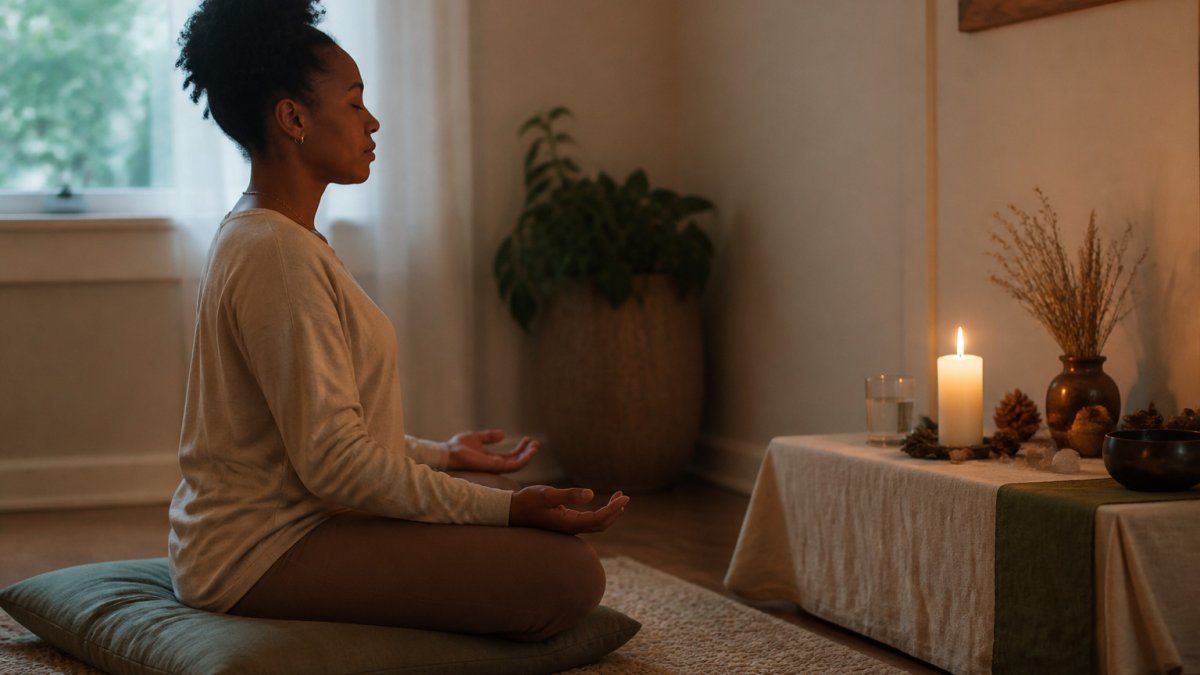
Light a candle if that feels supportive, place a glass of water nearby, and keep a grounding object within reach. Keep the room predictable: lights you can control, a door you can open, and no startling timers.
Step 5: Begin shorter than feels necessary
Five minutes of breathing followed by a candle lighting is enough for many people. The first session is a test, not a performance. If five minutes feels like too much, do two. If two feels like too much, do thirty seconds and count that as a complete practice.
Step 6: Check in during, not just after
Pause at the midpoint and ask three questions: Is my breathing comfortable? Can I feel my feet or seat? Do I want to continue? If any answer is no, use your stop signal. A practice that requires you to override your body's signals is not trauma-informed, no matter how calm it looks from the outside.
Blessing & Healing Ritual Bath - Ritual Bath Soak for Blessing, Healing →
Step 7: Reflect with plain language
Afterward, write a few sentences about how you felt before, during, and after. Use plain descriptions rather than judgments: "my shoulders were tight for the first minute" is more useful than "I did it wrong." Note what supported you and what did not, and keep the notes somewhere you will see them before the next session.
Step 8: Adjust one variable at a time
Keep what helps and drop what doesn't, but change only one dial per session, duration, eyes, sound, or body position. Changing one variable at a time lets you learn what actually made the difference. Increase length only when you have had several steady sessions in a row.
When to pause the whole practice
Consistency matters more than intensity. A few calm minutes a day, chosen deliberately and stopped deliberately, can do more than an occasional intense ritual that leaves you drained.
The steps below each have a clear time or frequency, so here is a summary of the practical process.
| Step | What to do | Time or frequency |
|---|---|---|
| Step 1: Name one intention and one limit | Pick a simple aim and a limit set in advance | Before you begin |
| Step 2: Choose the practice, then the version | Decide eyes, sound, body, duration and contact | Start with the shortest duration |
| Step 3: Set up a stop signal and grounding exit | Decide how to stop and where to go if overwhelmed | Practise the exit once while calm |
| Step 5: Begin shorter than feels necessary | Start with a few minutes, or even thirty seconds | Five minutes, two, or thirty seconds |
| Step 6: Check in during the practice | Pause at the midpoint and ask three questions | At the midpoint |
| Step 7: Reflect with plain language | Write a few sentences about how you felt | Afterward, after each session |
| Step 8: Adjust one variable at a time | Change only one dial per session | One change per session; lengthen after several steady sessions |
Risks, Warning Signs, and Evaluating a Facilitator
Not every spiritual practice is trauma-informed, and some can cause real distress. Here are the risks to watch for, the signs a practice is causing harm, and a practical way to evaluate a facilitator or community before you invest time, money, or trust.
Common risks in spiritual settings
- Dependency: a facilitator who becomes the only source of support, discourages outside help, or frames leaving as betrayal.
Warning signs a practice is causing distress
Watch for increased nightmares, persistent dissociation, withdrawal from loved ones, panic during practices that used to feel calm, or a growing sense that you must perform perfectly to be safe. If these appear, pause the practice and consider speaking with a licensed mental health professional.
How to evaluate a facilitator or community
Ask direct questions before you commit, and notice how the answers are given as much as what is said. A trustworthy facilitator welcomes them.
Consent and boundaries
- Do they explain what will happen before it does?
- Will they respect a "no" without argument, including a no to touch, eye contact, or sharing?
- Can you leave a session early without penalty or follow-up pressure?
Training and scope
- What training do they have, and what do they say it qualifies them to do?
- Do they acknowledge the limits of their expertise and refer out when a situation is beyond their scope?
- Do they distinguish spiritual guidance from mental-health treatment?
Confidentiality
- What is their confidentiality policy, and does it have clear exceptions?
- In a group setting, are there agreements about what is shared outside the room?
Referral and outside support
- Do they encourage you to keep other sources of support, including therapy or medical care?
- Can they name local or national resources they would refer to in a crisis?
Power and money
- Are fees stated clearly up front, with no escalating add-ons?
- Do they avoid framing payment as a spiritual obligation or a measure of your commitment?
Group culture
- Are members free to disagree or opt out of activities?
- Is there a way to raise a concern without retaliation?
What the evidence can and cannot tell you
Evidence on spiritual practices for trauma recovery is still developing, and claims of cure should be treated with caution. Many people find meaning, calm, and connection through trauma-informed practices, and these work best alongside, not instead of, professional treatment where it is needed. Spiritual practices can support coping, meaning-making, and connection; they are not a treatment for post-traumatic stress disorder, depression, or other clinical conditions.
If you are shopping for ritual tools
The same logic applies to products. Look for clear descriptions of ingredients and use, avoid products that promise to fix trauma, and choose items that fit a practice you can sustain. A candle or oil is a tool for a practice you control, not a substitute for care from a qualified professional.
Starting Your Own Gentle Practice
If you want tools for intention-setting, Black Moon Ritualcraft offers the Heart Mender Spell Candle at $24.99 and the Surrender & Letting Go Soy Wax Candle at $24.99.
Frequently Asked Questions
What is trauma-informed spiritual practice?
Trauma-informed spiritual practice is an approach to ritual, meditation, reflection, or other contemplative work.
What is the definition of spiritual trauma?
Spiritual trauma is harm that happens within a spiritual or religious setting, or harm that damages a person's sense of meaning, belonging, or connection to the sacred. It can come from abuse by a leader, shaming teachings, forced participation in rituals, or the loss of a community. Spiritual trauma can also occur when a person's core beliefs are broken by events such as a bereavement. Recognizing it helps people separate their own spirituality from the harm they experienced in a particular group.
How can I tell if a spiritual practice feels safe for me?
A practice is more likely to feel safe when you know what will happen before you begin, you can stop at any point without explanation, and no one pressures you to share feelings or accept a belief. Notice your body during and after the practice. Mild calm, relief, or curiosity are good signs. Persistent panic, dissociation, shame, or feeling worse for days suggest the practice is not right for you at this time. Start with short sessions and small steps.
What are examples of trauma-informed spiritual practices?
Examples include breath-focused meditation with eyes open, a candle-lighting ritual where you choose the intention, nature walks with attention to the senses, journaling, and grounding rituals using a meaningful object.
Can spiritual practices trigger trauma responses?
Yes. Chanting, group ritual, intense visualization, fasting, or practices that emphasize guilt, surrender, or obedience can bring up flashbacks, anxiety, numbness, or dissociation in some people. Trauma-informed practice reduces this risk by keeping sessions optional, using grounding before and after, and avoiding pressure to go deeper. If a practice regularly causes distress, pause it and consider speaking with a licensed mental-health professional.
How is trauma-informed spirituality different from trauma-informed theology?
Trauma-informed spirituality focuses on the practices a person uses, such as meditation, ritual, or reflection, and how those practices feel and affect them. Trauma-informed theology examines beliefs and teachings, including how doctrines about suffering, sin, or God's will may cause harm and how they can be presented more safely. Both aim to reduce harm, but one works with what you do and the other with what you believe.
When should someone seek support from a trauma-informed therapist?
Consider professional support if trauma symptoms such as flashbacks, intrusive memories, severe anxiety, depression, self-harm thoughts, or dissociation interfere with daily life, or if spiritual practices repeatedly cause distress. A licensed therapist trained in trauma-informed care can work alongside your spiritual practice rather than replace it. In a crisis, call or text 988 in the United States to reach the Suicide and Crisis Lifeline.
